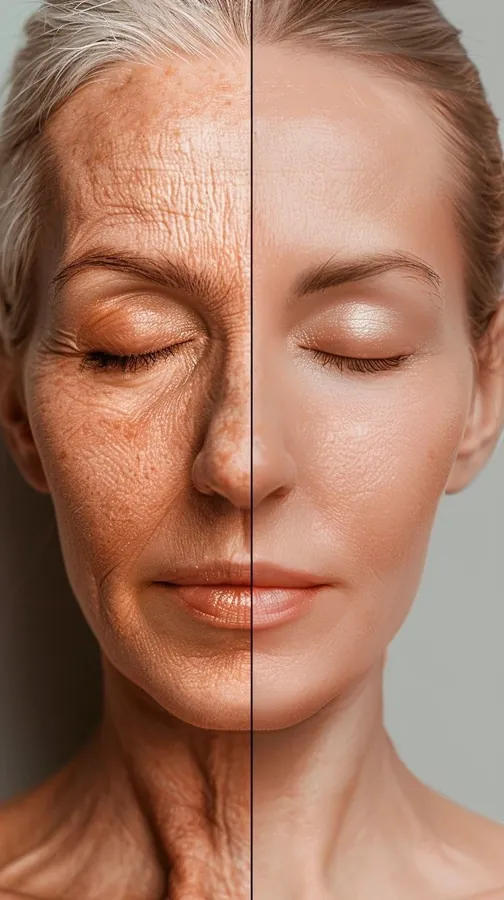
“Pigmentation” covers several distinct presentations. Differentiating them helps in choosing actives, setting realistic expectations and planning maintenance.
Hyperpigmentation is the umbrella term
Hyperpigmentation simply means areas of skin that look darker than the surrounding skin. It happens when skin produces more melanin in one area. The enzyme tyrosinase plays a key role in melanin production, which is why many brightening ingredients aim to slow it down.
Common types
- Sun spots – flat brown spots on areas that get the most sun.
- Post-inflammatory hyperpigmentation (PIH) – dark marks left behind after acne, a cut or irritation.
- Freckles – small, often genetic spots that darken with sun exposure.
Melasma behaves differently
Melasma usually appears as larger, often symmetrical patches on the cheeks, forehead, nose or upper lip. Sun exposure, heat, hormonal changes and genetics are all thought to play a part. It tends to be persistent and can return, which is why it needs consistent care and medical guidance.
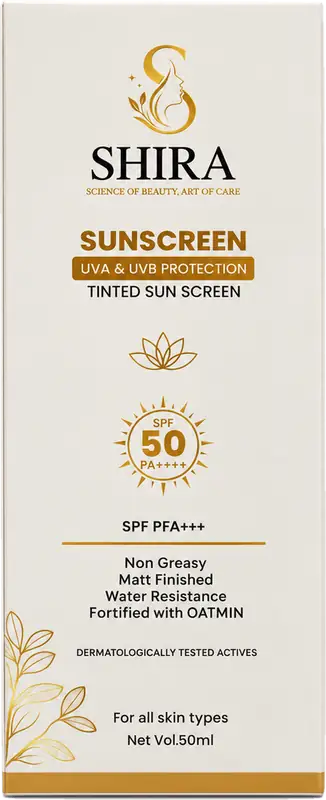
Pigmentation fades slowly. Most routines need several weeks of consistent use – and daily sunscreen – before changes become visible.
Commonly used actives
- Glycolic acid and fruit AHAs exfoliate dull, pigmented surface cells.
- Alpha arbutin and kojic acid help reduce the look of uneven tone by working on tyrosinase.
- Hydroquinone is a strong skin-lightening active. It should be used only under the supervision of a dermatologist.
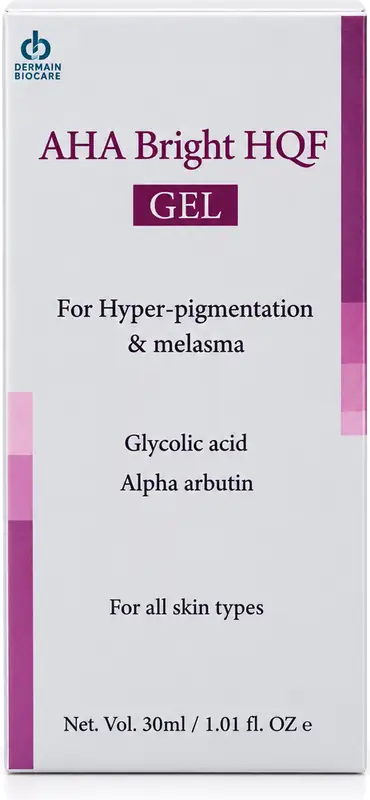
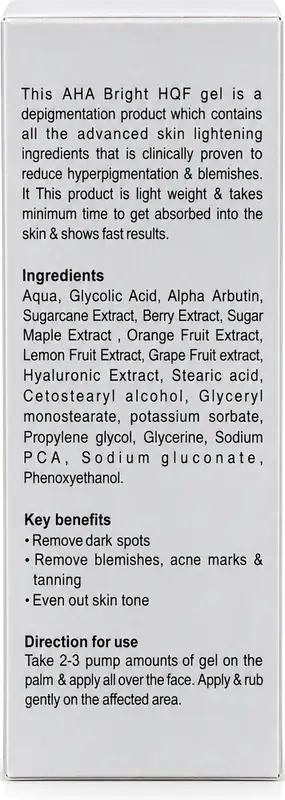
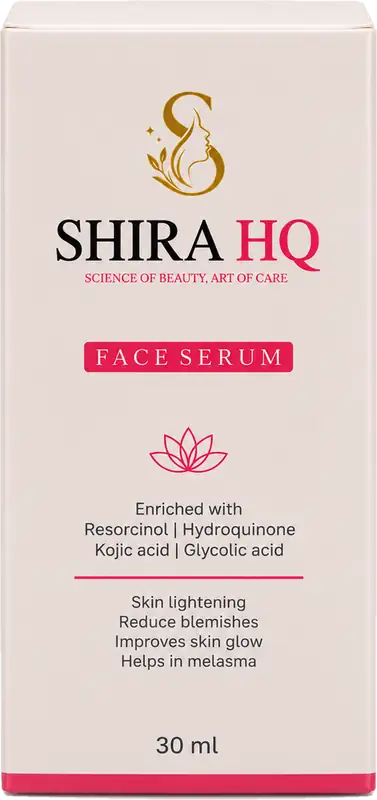
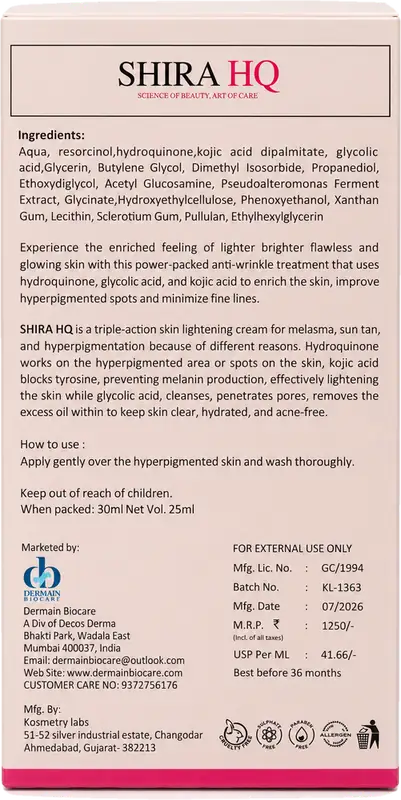
AHA Bright HQF is a non-steroidal gel with 6% glycolic acid and 4% alpha arbutin. Shira HQ is a serum with hydroquinone, resorcinol, kojic acid and glycolic acid, for use under dermatologist guidance. View pigmentation care
When to investigate further
Atypical, rapidly changing, itchy or treatment-resistant lesions warrant further evaluation before depigmenting therapy. Confirming the type of pigmentation guides the choice of actives and the maintenance plan.
Key takeaways for practice
- Hyperpigmentation is an umbrella term; melasma is persistent and prone to relapse.
- Tyrosinase inhibitors (alpha arbutin, kojic acid, hydroquinone) and AHAs act at different steps.
- Hydroquinone-containing products should be used only under medical supervision.
Patient counselling points
- Set expectations: visible change usually takes several weeks of consistent use.
- Strict daily photoprotection is essential to maintain results.
- Report irritation early; avoid self-medication with strong actives.
This article is intended for registered medical practitioners and healthcare professionals. It is for professional information and does not replace clinical judgement. *Individual results may vary.

For healthcare professionals
From theDermain portfolio