
Salicylic acid remains one of the most widely used topical actives in acne care. Its value lies in where it works: inside the pore.
What makes salicylic acid different
Salicylic acid is a beta-hydroxy acid (BHA). Unlike water-soluble AHAs, it is oil-soluble, so it can move into pores lined with sebum. There it helps loosen the build-up of dead cells and oil that leads to blackheads and whiteheads. This is called a keratolytic action.
Supporting ingredients
- Nicotinamide – a skin-conditioning active that supports a more balanced-looking complexion.
- Tea tree oil – helps calm the look of redness and has antimicrobial properties.
- Azelaic acid – often used in acne-care routines alongside salicylic acid.
Body acne needs a different format
Acne on the back, chest and upper arms is common, especially with sweat, tight clothing and sport. These areas are hard to reach with a gel, which is why sprays are useful.
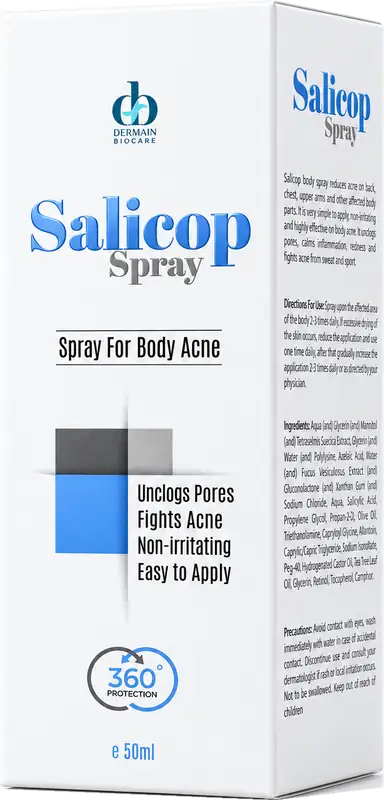
Salicop Gel (2% salicylic acid, 4% nicotinamide) is made for the face; Salicop Spray brings salicylic and azelaic acid to the back, chest and arms. View acne care
Counselling for tolerability
- Start once a day and increase only if well tolerated.
- If marked dryness or irritation occurs, reduce frequency and review.
- Shower soon after workouts and avoid picking or squeezing spots.
- Use sunscreen during the day and a light, non-comedogenic moisturiser.
Key takeaways for practice
- Salicylic acid is lipophilic and keratolytic – it acts within the sebum-filled pore.
- Nicotinamide, tea tree oil and azelaic acid are common supportive co-actives.
- Spray formats improve reach and adherence for back, chest and upper-arm acne.
Patient counselling points
- Start once daily and titrate according to tolerance.
- Shower soon after workouts; avoid picking or squeezing lesions.
- Use sunscreen and a light, non-comedogenic moisturiser.
This article is intended for registered medical practitioners and healthcare professionals. It is for professional information and does not replace clinical judgement. *Individual results may vary.

For healthcare professionals
From theDermain portfolio